
Immersive Theatre vs Immersive Museums: Where Experiences Diverge and Converge
Museums face a parallel challenge: how to make educational content as compelling as entertainment while maintaining academic rigor. As projection-based VR and spatial audio technologies advance, the line between theatrical spectacle and museum exhibition continues to blur. Understanding where these two forms intersect and where they fundamentally differ reveals powerful strategies for creating memorable learning experiences. In this guide, we identify valuable lessons for museum experience design by examining how immersive theatre shapes audience engagement.

How Immersive Theatre Creates Presence and Connection
Immersive theatre excels at establishing emotional connection through presence. Audience members become witnesses rather than observers, which strengthens memory retention and empathy. Set design, lighting, and live performances create realistic environments that transport participants into another world.
The techniques that make immersive theatre effective include spatial storytelling, where scenes unfold in 360 degrees around the audience. Sensory engagement through sound, lighting, and tactile effects heightens emotional response. Nonlinear narratives allow audiences to follow multiple storylines simultaneously, while atmospheric details enhance realism.
Translating Theatre Principles to Museum Spaces
Museums can adapt immersive theatre methods while maintaining their educational mission.
Cinematic VR films can vividly depict complex scientific concepts or historical events through 360-degree storytelling that combines live-action and animation.
Spatial audio layers guide attention naturally and simulate movement within exhibits.
Emotional anchors at key moments in the narrative spark curiosity and improve information retention.
Sequential learning through structured scenes supports understanding while encouraging discovery.
Projection-based solutions offer particular advantages for museums by allowing groups to experience content together, preserving the social and educational context.
Practical Strategies Museums Can Adopt
By borrowing from immersive theatre's toolkit, institutions can create environments where learning feels less like information delivery and more like discovery.
Effective strategies include:
Threshold Moments. Design clear entry points into exhibition spaces that signal a transition from everyday reality into the exhibit's world, mirroring how immersive theatre uses anterooms or corridors to prepare audiences.
Choreographed Circulation. Map visitor pathways that naturally unfold content in sequence, using architectural cues and subtle barriers to guide flow without restricting exploration.
Temporal Staging. Schedule timed elements like projection sequences or audio narratives that create a sense of event, encouraging visitors to experience content fully rather than rushing through.
Proxemic Zones. Vary the scale and intimacy of spaces, offering both grand vistas for group viewing and intimate alcoves for personal reflection.
Sensory Layering. Combine visual projections with ambient soundscapes and even temperature or scent where appropriate, building a multisensory environment that reinforces content themes.
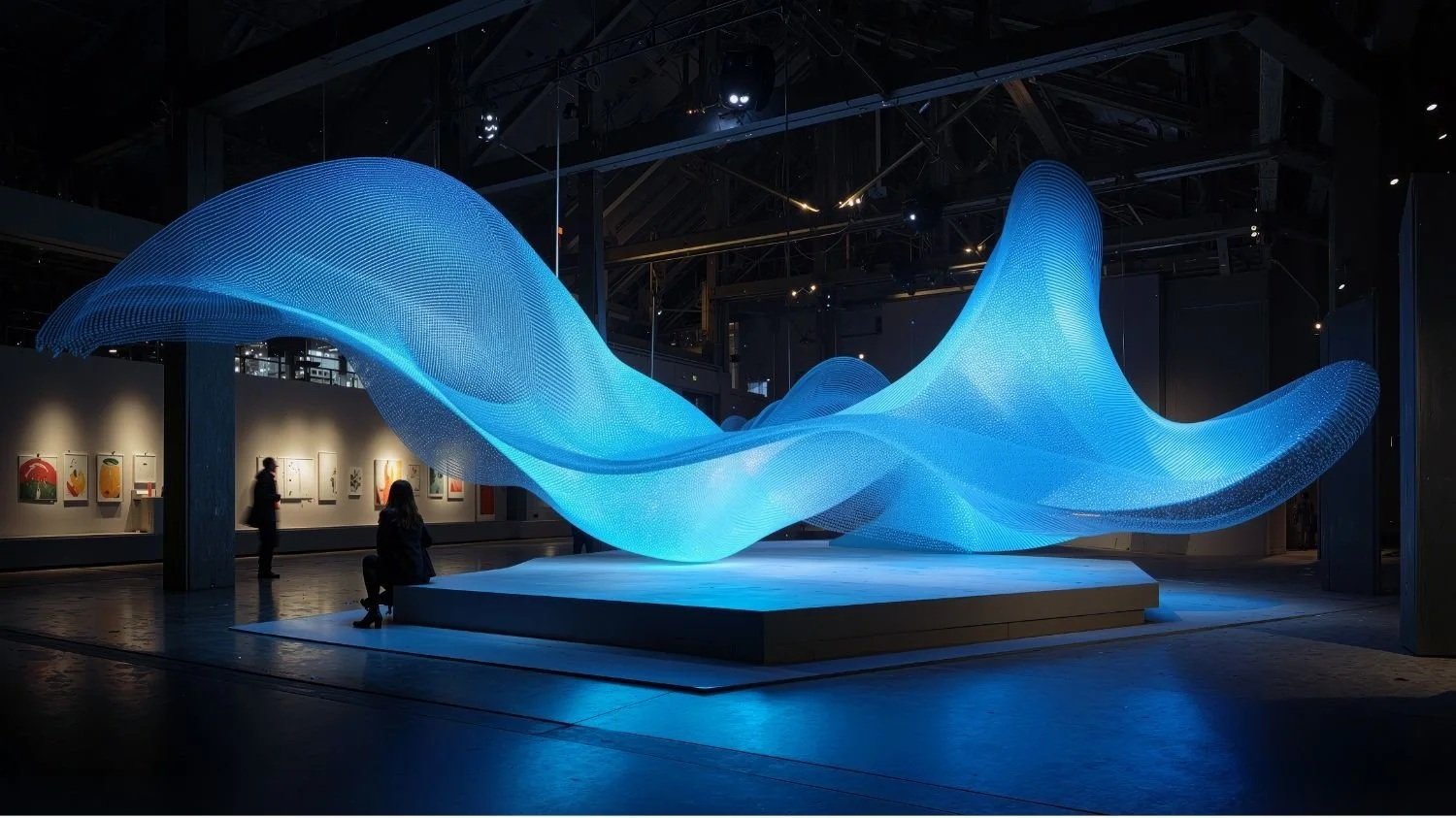
The Future of Museum Engagement
Museums today increasingly use cinematic VR and projection systems to bring history, science, and art to life. By combining theatrical storytelling techniques with rigorous educational content, institutions can create transformative experiences that engage visitors on multiple levels. Working with experienced partners ensures that educational goals remain central while delivering powerful, theatre-inspired experiences.
For museums ready to explore these possibilities, Hammer & Anvil specializes in 360° VR films designed for educational spaces. Our ALICE (Advanced Learning Immersive Cinema Experience) theater enables institutions to easily integrate cinematic VR content into existing spaces and programs to create immersive learning environments.
Available from a three-month installation period, the ALICE operates on flexible cycles, enabling museums to regularly update content and attract repeat visitors seeking fresh experiences. Rather than being locked into a permanent fixture, this system prioritizes adaptability with out-of-the-box readiness that demands minimal staffing and technical effort. The installation accommodates diverse museum layouts and attendance levels, supporting anywhere from small five-seat venues to expansive hundred-plus-seat environments.
Explore how Hammer & Anvil can transform walls into worlds. Let’s connect.