
Cultural Exploration and the Immersive Museum: Attracting a New Generation of Experience-Seekers
Museums have long served as guardians of cultural heritage, preserving artifacts and narratives that connect us to our past. Today, a transformation is underway as cultural institutions embrace new approaches to engage visitors. The immersive museum represents a significant evolution in how we experience history, art, and science, offering multisensory encounters that complement traditional exhibitions. This shift responds to changing visitor expectations, particularly among younger generations who seek meaningful connections with the content they encounter. By integrating technology and spatial design, museums are creating environments where learning becomes an active journey rather than passive observation.

Understanding the Experience-Seeking Generation
Millennials and Gen Z approach cultural consumption differently from previous generations. These visitors value authenticity, personal relevance, and shareable moments that extend beyond the museum walls. Research shows that younger audiences prioritize experiences over material possessions, seeking opportunities that provide both education and emotional resonance.
This demographic grew up surrounded by digital technology, making them comfortable with blended physical and virtual environments. They expect cultural institutions to meet them where they are, offering content that feels both accessible and substantive. However, this doesn't mean abandoning scholarly rigor or traditional curatorial practices. Instead, the challenge lies in presenting well-researched content through formats that invite participation and personal discovery.
Museums that successfully attract these visitors understand that engagement begins before arrival and continues after departure. Social media integration, behind-the-scenes content, and opportunities for creative expression help build lasting relationships with audiences who want to be collaborators in the cultural conversation rather than spectators.
The Role of Multisensory Environments
An immersive museum engages multiple senses simultaneously, creating memorable encounters with cultural material. Sound design, lighting, and spatial arrangement can transform how visitors perceive and remember exhibitions. These elements work together to create atmospheric contexts that deepen understanding without replacing the artifacts themselves.
Consider how projection mapping can illuminate architectural details that might otherwise go unnoticed, or how soundscapes can transport visitors to different time periods and locations. These techniques enhance observation skills rather than distracting from the content. When implemented thoughtfully, they serve as interpretive tools that complement traditional labels and didactic panels.
The physical environment itself becomes part of the narrative. Scaled recreations, period-appropriate settings, and carefully designed pathways guide visitors through stories in ways that static displays alone don’t achieve. This approach doesn't diminish the value of glass cases and wall-mounted plaques but rather offers additional layers of interpretation for those who benefit from contextual immersion.
Technology as Enhancement, Not Replacement
Virtual reality, augmented reality, and mixed reality technologies offer museums unprecedented opportunities to expand their educational reach. An immersive museum might use augmented reality to show how ancient structures originally appeared, or virtual reality to place visitors inside historical moments. These tools excel at making abstract concepts tangible and distant events feel immediate.
However, technology serves best when it supports rather than overshadows the collection. The goal is not to create theme park attractions but to provide access to information and perspectives that traditional methods have a limited capacity to convey. A well-designed digital experience answers questions visitors didn't know they had, revealing connections between objects and ideas that deepen appreciation for the physical artifacts.
Museums should balance innovation with preservation of core educational missions. Technology implementation should follow clear objectives, ensuring that each digital element contributes meaningfully to learning outcomes. When executed with this philosophy, technological enhancements strengthen traditional scholarship and display practices.
Practical Applications in Cultural Institutions
Hammer & Anvil provides specialized solutions that help implement immersive museum experiences while maintaining educational integrity. Our approach focuses on creating technology-enhanced environments that work alongside traditional exhibitions.
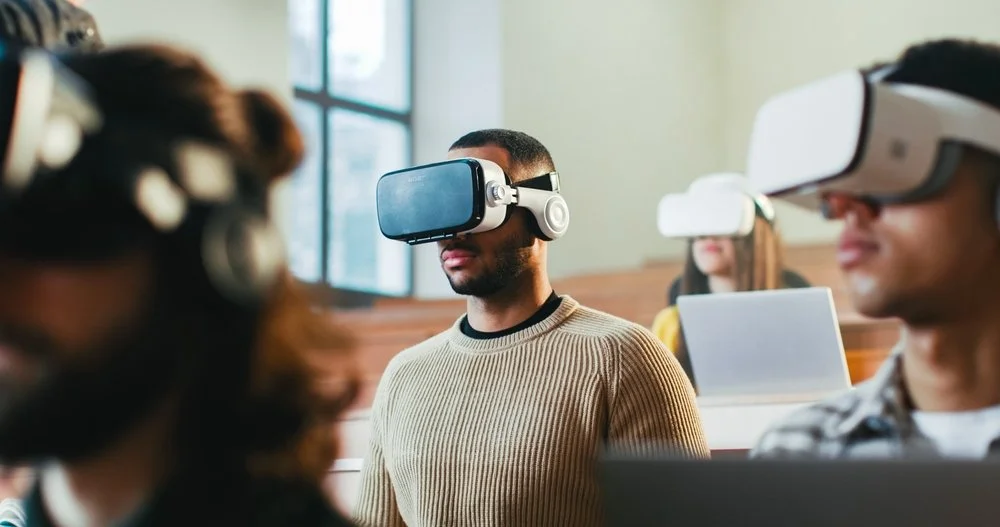
The ALICE (Advanced Learning Immersive Cinema Experience) is a fully managed VR theater system designed for museums of all sizes. This turnkey solution enables multiple visitors to experience cinematic VR content simultaneously in a shared theater environment. The system is scalable, accommodating configurations from small 5-seat setups to larger installations with 100+ seats, adapting to different institutional spaces and visitor capacities.
The immersive educational experiences available through ALICE transport visitors to paleontological dig sites, deep-sea environments, distant exoplanets, and historical moments. These cinematic journeys combine high-resolution 360-degree video, spatial audio, and photorealistic animation to create emotionally engaging learning experiences.
ALICE arrives fully pre-configured and requires minimal technical expertise to operate, featuring simple one-button operation. This allows museum staff to focus on engaging visitors rather than managing complex technology. The system offers institutions the ability to provide premium, ticketed experiences that can generate revenue while delivering educational value. Museums can refresh their offerings regularly with new VR films from Hammer & Anvil's expanding content library, creating sustainable programming that encourages repeat visits.
Building Sustainable Engagement Models
Attracting visitors once is valuable, but building ongoing relationships creates sustainable support for cultural institutions. The immersive museum approach naturally lends itself to repeat visits, as exhibitions can evolve and offer different experiences over time. Seasonal programming, rotating digital content, and temporary installations keep offerings fresh without requiring complete gallery redesigns.
Educational programming benefits particularly from immersive formats. School groups, university classes, and lifelong learners all find value in experiences that adapt to different age groups and knowledge levels. By offering varied entry points into complex topics, museums can serve broader audiences without diluting content quality.
Membership models evolve as institutions recognize that experience-seekers want exclusive access to special programming, early exhibition openings, and opportunities to participate in content creation. These audiences will support institutions that consistently deliver meaningful encounters with culture and knowledge.
Creating Spaces Where Culture Comes Alive
By working with partners who share their educational values, museums can implement innovations that attract new audiences while honoring their fundamental mission of cultural preservation and public education. The future of the immersive museum lies not in replacing what works but in thoughtfully expanding the ways we can connect people with the richness of human culture.
At Hammer & Anvil, we specialize in creating educational experiences that respect cultural content while leveraging cutting-edge tools. In addition to the ALICE, our ALICE Go portable, seated group VR theater delivers immersive learning experiences anywhere your audience gathers. It is built on the same storytelling and playback system as our full-scale ALICE theater, but in a compact, portable format designed for libraries, school districts, and outreach programs. The ALICE Go is a traveling immersive cinema, purpose-built for education, STEM engagement, and community programming.
Ready to transform your museum into an immersive destination? Contact Hammer & Anvil today to discover how ALICE and ALICE Go can elevate your institution's educational impact and visitor engagement through immersive cinema experiences designed for modern audiences.